 By
By Noida’s industrial belt, hospitality sector, and healthcare institutions all share one common challenge — access to consistent, good-quality water. Groundwater in and around Noida often carries elevated levels of total dissolved solids (TDS), hardness, and other dissolved impurities that vary from one sector to another. For a factory running production lines, a hotel serving guests, or a hospital handling sensitive equipment, untreated or poorly treated water can lead to scaling in pipelines, reduced equipment life, and inconsistent process outcomes.
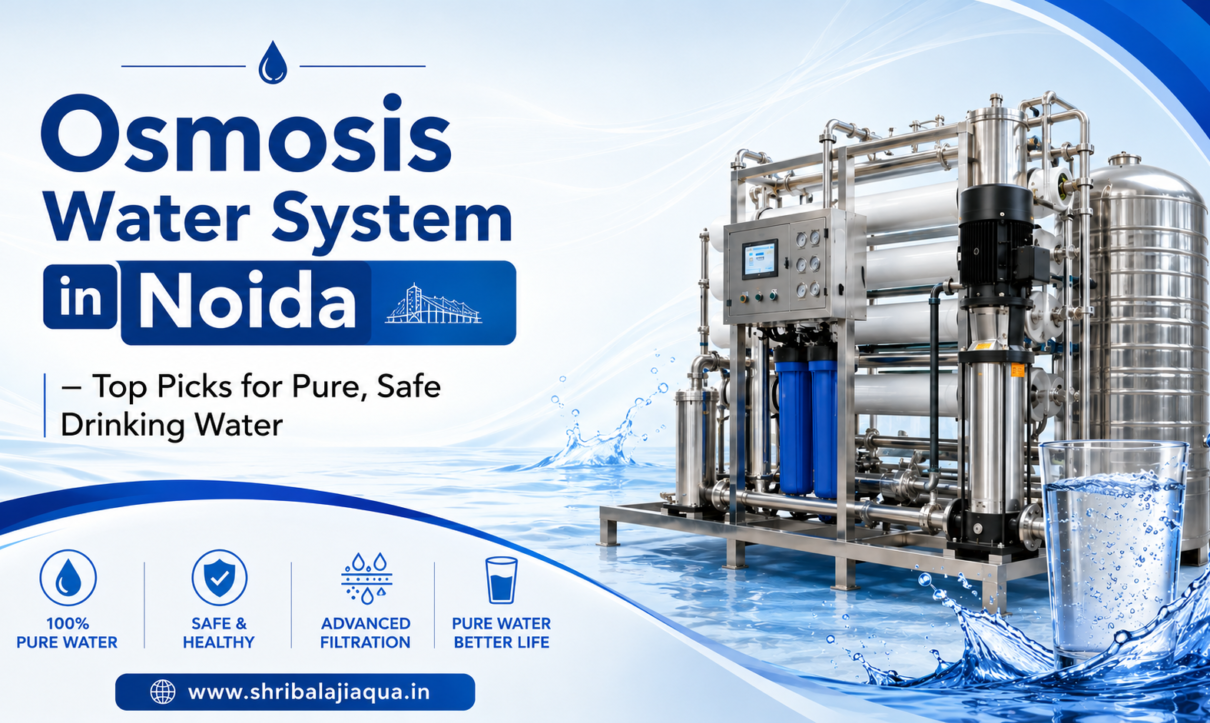
This is where an Osmosis Water System in Noida becomes a practical necessity rather than a luxury. Reverse Osmosis (RO) technology has become the standard choice for industries and commercial establishments that need dependable water quality, day after day. In this blog, we’ll walk through how RO systems work, what to look for before buying one, and the factors that genuinely affect performance and longevity — without the exaggerated claims often seen online.
What is an Osmosis (RO) Water System?
A Reverse Osmosis system is a water treatment setup that pushes raw water through a semi-permeable membrane under pressure. The membrane allows water molecules to pass through while blocking dissolved salts, certain contaminants, and suspended particles. The result is treated water with significantly reduced TDS and improved consistency compared to the source water.
Unlike simple filtration, which mainly targets suspended solids, RO addresses dissolved impurities as well — making it suitable for applications where water hardness or salinity is a recurring concern.
How Does an RO Water Treatment Plant Work?
A typical RO Water Treatment Plant in Noida operates in stages:
- Pre-treatment – Raw water passes through sediment and carbon filters to remove suspended particles, chlorine, and odour-causing compounds that could damage the RO membrane.
- Pressurisation – A high-pressure pump forces water through the semi-permeable membrane.
- Membrane separation – The membrane separates water into two streams: permeate (treated water) and reject/concentrate (water carrying rejected impurities).
- Post-treatment – Depending on the application, treated water may pass through additional polishing filters, UV disinfection, or mineral dosing before use or storage.
Major Components of an RO System
- Raw water storage and feed pump
- Multimedia and carbon filters
- Antiscalant dosing system
- Micron cartridge filters
- High-pressure pump
- RO membranes (the core filtration element)
- Multiport valves for backwashing and regeneration cycles
- Treated water storage tank
- Control panel with pressure gauges and flow meters
Each component plays a specific role, and the overall performance of the system depends on how well these parts are matched to the raw water characteristics and the intended use.
Key Features and Benefits
- Reduces TDS, hardness, and several dissolved contaminants
- Provides consistent water quality for process and utility use
- Reduces scaling in boilers, cooling towers, and pipelines
- Supports compliance with quality requirements in food, pharma, and healthcare settings
- Available in modular capacities, allowing expansion as demand grows
It’s worth noting that RO does not eliminate every dissolved substance, and performance depends on factors like membrane condition, feed water quality, and system maintenance — so it’s best to set realistic expectations based on your raw water report.
Industrial and Commercial Applications
An osmosis water system in Noida is used across a wide range of sectors:
- Manufacturing units – Process water for production lines, boiler feed, and equipment cooling
- Hotels and hospitality – Consistent water quality for kitchens, laundry, and guest use
- Hospitals and healthcare facilities – Water for dialysis units, sterilisation, and general use, where quality consistency is critical
- Food and beverage industry – Process water that meets specific quality parameters
- Institutions and commercial complexes – Drinking water and utility water for large occupant volumes
For high-demand applications, businesses often look at options like a 2000 LPH RO plant in Noida, which is suited to medium-to-large facilities with continuous water requirements. Capacity selection, however, should always be based on actual consumption patterns rather than assumptions.
Water Quality Problems an RO System Can Help Address
- High TDS levels affecting taste and equipment life
- Hardness causing scale build-up in pipes and machinery
- Presence of dissolved salts and certain heavy metals
- Inconsistent water quality from borewell or municipal sources
- Turbidity and odour issues when combined with proper pre-treatment
Factors to Consider Before Selecting a System
Choosing the right system isn’t just about picking the highest-capacity plant available. A few practical factors matter more:
1. Raw Water Analysis
Before recommending any system, a proper raw water test should be conducted to check TDS, hardness, pH, iron content, and other relevant parameters. This determines the type of pre-treatment required and the membrane configuration needed. Skipping this step is one of the most common reasons RO systems underperform or need frequent servicing.
2. Capacity Planning
Plant capacity — whether it’s a smaller unit or a commercial RO plant in Noida rated for higher output — should be based on your facility’s actual peak and average water demand, not just current usage. Undersized systems struggle to meet demand; oversized systems run inefficiently.
3. Application-Specific Requirements
Water for boiler feed has different quality requirements than drinking water or process water in food manufacturing. The system design should reflect the end-use.
4. Space and Installation Considerations
Available floor space, ventilation, drainage for reject water, and access for maintenance all influence plant layout and design.
5. Long-Term Operating Costs
Membrane life, energy consumption, and chemical dosing requirements affect the total cost of ownership over time — these are worth discussing upfront rather than after installation.
Installation Considerations
Proper installation directly affects how well a system performs over its lifetime. Key points include:
- Adequate space for the plant, storage tanks, and pipework
- Proper electrical load planning
- Drainage arrangement for reject water
- Correct sequencing of pre-treatment units ahead of the RO membrane
- Commissioning checks to confirm pressure, flow rate, and recovery percentage are within expected range
Routine Maintenance Requirements
An RO system, like any treatment equipment, requires scheduled upkeep:
- Regular replacement of sediment and carbon filter cartridges
- Periodic membrane cleaning (CIP – Clean in Place) to manage fouling and scaling
- Monitoring of pressure differentials to detect membrane fouling early
- Checking antiscalant dosing rates
- Replacing membranes when performance drops below acceptable recovery or rejection levels
- Regular calibration of instruments like TDS meters and flow meters
Consistent maintenance schedules help maintain treatment consistency and extend the working life of both the membrane and supporting equipment.
Common Mistakes Buyers Should Avoid
- Selecting plant capacity without proper water demand assessment
- Skipping raw water testing before finalising system design
- Choosing membranes or components based on price alone, without checking compatibility with feed water quality
- Delaying scheduled maintenance until performance visibly drops
- Not accounting for reject water disposal or recycling during planning
- Overlooking after-sales service and spare parts availability from the supplier
Why Choosing a Reliable Water Treatment Partner Matters
Water treatment isn’t a one-time purchase — it’s an ongoing relationship involving servicing, consumables, and occasional troubleshooting. Working with an experienced provider for RO water services in Noida ensures that system design, installation, and after-sales support are handled by people who understand local water conditions and industrial requirements.
Shri Balaji Aqua has worked with industries, institutions, and commercial establishments on water and wastewater treatment requirements, offering RO plants, DM plants, filtration systems, RO membranes, water treatment chemicals, resins, multiport valves, and water testing support. As one of the industrial RO plant manufacturers in Noida, the focus remains on designing systems around actual raw water conditions and application needs, rather than one-size-fits-all setups.
Why Professional Consultation Matters Before Finalising a System
Every facility has different water sources, usage patterns, and quality expectations. A brief consultation — including raw water testing and a review of your daily consumption — helps avoid costly mismatches between what a system is designed to handle and what your facility actually needs. This is particularly important for larger installations, such as a commercial or 2000 LPH-range plant, where design errors are more expensive to correct later.
If you’re evaluating options for a water treatment plant in Noida, it’s worth speaking with a technical team before finalising specifications, capacity, or budget.
Get in Touch with Shri Balaji Aqua
Whether you need a new installation, capacity upgrade, membrane replacement, or general guidance on selecting the right RO water treatment plant for your facility, Shri Balaji Aqua’s team can assist with product details, technical recommendations, and quotations tailored to your water quality and consumption requirements.
Reach out to Shri Balaji Aqua today for a consultation on your industrial or commercial water treatment needs.
Frequently Asked Questions (FAQs)
1. What is the difference between an RO plant and a regular water filter?
A regular filter mainly removes suspended particles and sediment, while an RO plant uses a semi-permeable membrane to also reduce dissolved solids like salts and hardness-causing minerals.
2. How do I know what capacity RO plant I need for my facility?
Capacity should be based on your average and peak daily water consumption, along with the specific application (drinking, process, or boiler feed water). A raw water and demand analysis helps determine the right size.
3. How often should RO membranes be replaced?
Membrane life depends on feed water quality, usage, and maintenance practices, but performance should be monitored regularly through pressure and rejection-rate checks to determine when replacement is due.
4. Is raw water testing necessary before installing an RO system?
Yes. Testing parameters like TDS, hardness, pH, and contaminant levels helps determine the correct pre-treatment and membrane configuration, reducing the chances of underperformance or frequent breakdowns.
5. What maintenance does an industrial RO plant require?
Routine maintenance includes filter cartridge replacement, membrane cleaning, dosing system checks, and periodic instrument calibration to maintain consistent treatment quality.
6. Can RO plants be customised for specific industries like hospitals or hotels?
Yes, RO systems can be designed with additional pre- or post-treatment stages depending on the specific water quality requirements of the application, such as dialysis-grade water or boiler feed water.
7. Who should I contact for RO plant installation and service in Noida?
Shri Balaji Aqua provides consultation, product supply, and support for RO plants, water treatment systems, and related components for industrial and commercial applications in Noida.