 By
By Noida’s industrial belt from Sector 63 to Ecotech and the Surajpur-Kasna corridor has grown faster in the last five years than almost any other manufacturing hub in the National Capital Region. Pharmaceutical units, textile processors, food and beverage plants, electroplating workshops, and automobile ancillaries now operate side by side, and every single one of them produces wastewater that cannot simply be released into a drain. This is exactly where an Effluent Treatment Plant Supplier in Noida becomes a business necessity rather than a compliance checkbox.
If you are searching for a dependable Effluent Treatment Plant Supplier in Noida in 2026, this guide walks you through everything you need to know what an ETP actually does, how the treatment process works, which technology suits your industry, how to evaluate a supplier, and why Shri Balaji Aqua Pvt. Ltd. has become the trusted name for industries and residential societies across Noida, Greater Noida, and the wider NCR.
This article has been written after reviewing how the region’s leading water-treatment companies present their services, so that you get a single, complete, and genuinely useful resource, not a scattered collection of half-answers.
What is an Effluent Treatment Plant and Why Does Noida Need One in 2026?
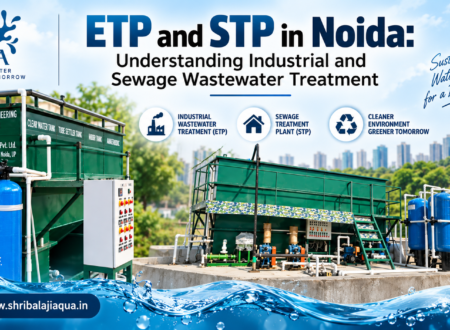
An Effluent Treatment Plant (ETP) is an engineered system that removes pollutants, suspended solids, oils, heavy metals, and organic contaminants from industrial or commercial wastewater before it is discharged or reused. Unlike a Sewage Treatment Plant (STP), which primarily handles domestic sewage, an ETP is built to handle the far more aggressive and variable composition of industrial effluent — think dyes from textile units, heavy metals from electroplating lines, or high BOD/COD loads from food processing plants.
Understanding Industrial Effluent in Noida
Noida’s industrial zones host a wide mix of manufacturing activity, and each sector generates a distinct wastewater profile:
- Pharmaceutical units release effluent containing active pharmaceutical ingredients, solvents, and high COD loads.
- Textile and dyeing units discharge water heavy in color, salts, and complex organic dyes.
- Electroplating and metal-finishing units generate wastewater with dissolved heavy metals such as chromium, nickel, and zinc.
- Food and beverage plants produce effluent with high biological oxygen demand (BOD) from organic waste.
- Automobile ancillary units discharge oil, grease, and paint residues.
Without proper treatment, this effluent contaminates groundwater, damages soil fertility, and poses direct health risks to communities living near industrial clusters — which is precisely why Uttar Pradesh Pollution Control Board (UPPCB) and the Central Pollution Control Board (CPCB) have tightened discharge norms in recent years.
The Legal and Environmental Push Behind ETP Adoption
Every industrial unit operating in Noida is required to hold Consent to Establish and Consent to Operate certificates from UPPCB, and a functioning ETP is a non-negotiable part of that approval. Non-compliance can lead to heavy penalties, unit closure notices, and legal action under the Water (Prevention and Control of Pollution) Act. Beyond compliance, industries are increasingly adopting ETPs to support water recycling, reduce freshwater dependency, and strengthen their ESG and sustainability credentials, something buyers, investors, and export clients now actively look for.
Why Shri Balaji Aqua Is the Preferred Effluent Treatment Plant Supplier in Noida
Among the many companies offering wastewater treatment solutions in the region, Shri Balaji Aqua Pvt. Ltd. has built its reputation on a simple principle: design the right system for the actual effluent, not a one-size-fits-all package. The company, headquartered in Sector 10, Noida, works directly with industrial units, commercial complexes, hospitals, hotels, and residential societies to design, supply, install, and maintain ETP and STP systems that meet UPPCB and CPCB norms consistently.
What Sets Shri Balaji Aqua Apart
1. Site-Specific Engineering, Not Generic Templates Every project begins with an effluent characterization study testing pH, BOD, COD, TSS, oil and grease content, and any industry-specific contaminants so the treatment train is designed around your actual wastewater, not an assumed average.
2. End-to-End Ownership From the first consultation to design, fabrication, civil coordination, installation, commissioning, and post-installation Annual Maintenance Contracts (AMC), Shri Balaji Aqua manages the entire lifecycle of the plant under one roof, removing the coordination headache of dealing with multiple vendors.
3. Compact, Space-Efficient Designs Noida’s industrial plots are often space-constrained. Shri Balaji Aqua specializes in compact ETP layouts that fit tight footprints without compromising treatment efficiency, a factor that matters enormously for units operating out of smaller industrial sheds.
4. Genuine After-Sales Support Many suppliers disappear after installation. Shri Balaji Aqua’s team remains available for operator training, troubleshooting, and scheduled maintenance visits, ensuring the plant continues performing at the levels promised during commissioning.
5. Transparent, Honest Communication Clients consistently mention straightforward guidance and fair recommendations during the inquiry stage, an increasingly rare trait in an industry where over-selling is common.
ETP Technologies Offered by Shri Balaji Aqua
Choosing the right treatment technology depends on effluent volume, pollutant type, available space, and the final use of treated water (discharge, reuse, or zero liquid discharge). The table below summarizes the core technologies Shri Balaji Aqua deploys across Noida projects.
| Technology | Best Suited For | Key Advantage |
| Activated Sludge Process (ASP) | Medium-load industrial and commercial effluent | Reliable, well-proven biological treatment for organic pollutant removal |
| Moving Bed Biofilm Reactor (MBBR) | Food, beverage, and pharmaceutical effluent with high BOD/COD | Compact footprint with high treatment efficiency |
| Sequential Batch Reactor (SBR) | Units with fluctuating flow rates | Flexible, automated batch-wise treatment cycle |
| Physico-Chemical Treatment | Electroplating, textile, and dyeing effluent with heavy metals | Effective coagulation-flocculation for color and metal removal |
| Membrane Bioreactor (MBR) | Facilities requiring high-quality reusable water | Superior effluent quality suitable for recycling |
| Reverse Osmosis (RO) & Ultrafiltration (UF) | Tertiary treatment for water reuse | Enables near-complete contaminant removal for recycling |
| Zero Liquid Discharge (ZLD) Systems | Water-stressed zones and high-compliance industries | Eliminates liquid waste discharge entirely |
Shri Balaji Aqua’s engineering team recommends a technology combination, often a biological stage followed by physico-chemical polishing and, where required, membrane-based tertiary treatment rather than relying on a single process, which is how most real-world compliance failures are avoided.
Industry-Wise ETP Solutions Across Noida
Because every sector produces a different wastewater fingerprint, Shri Balaji Aqua designs sector-specific treatment trains. Here is how the requirements typically differ:
| Industry Sector | Primary Pollutants | Recommended Treatment Approach |
| Pharmaceutical | High COD, solvents, active compounds | MBBR + physico-chemical + advanced oxidation |
| Textile & Dyeing | Color, salts, complex dyes | Coagulation-flocculation + biological treatment |
| Electroplating & Metal Finishing | Heavy metals (chromium, nickel, zinc) | Chemical precipitation + filtration |
| Food & Beverage | High BOD, organic solids | ASP/MBBR biological treatment |
| Hospitals & Healthcare Facilities | Pathogens, pharmaceutical residues | Biological treatment + disinfection (chlorination/UV) |
| Automobile Ancillary | Oil, grease, paint residue | Oil-water separation + physico-chemical treatment |
| Residential Societies & Commercial Complexes | Domestic-grade organic waste | STP with MBBR/SBR technology |
This sector-specific approach is one of the biggest reasons industrial clients across Sector 63, Sector 65, Phase I & II, and neighbouring Greater Noida industrial zones continue to rely on Shri Balaji Aqua for both new installations and upgrades of ageing plants.
How an Effluent Treatment Plant Works: The Step-by-Step Process
Understanding the treatment journey helps you evaluate whether a proposed system is genuinely adequate for your effluent load. Here is the typical multi-stage process Shri Balaji Aqua follows:
| Stage | Process | Purpose |
| 1. Screening | Wastewater passes through bar screens | Removes large solids, debris, and grit |
| 2. Equalization | Effluent is collected in an equalization tank | Balances flow rate and pollutant concentration |
| 3. Primary Treatment | Sedimentation and clarification | Settles suspended solids and reduces organic load |
| 4. Chemical Treatment | Coagulation and flocculation | Neutralizes pH and aggregates fine particles for removal |
| 5. Secondary (Biological) Treatment | Aerobic/anaerobic processes (ASP, MBBR, SBR) | Breaks down dissolved organic pollutants |
| 6. Tertiary Treatment | Filtration, UF, RO (where required) | Polishes water quality for reuse or safe discharge |
| 7. Sludge Management | Sludge thickening and dewatering | Safely handles and disposes of residual solid waste |
| 8. Disinfection (if applicable) | Chlorination or UV treatment | Removes pathogens before discharge or reuse |
Each stage is monitored and calibrated to the specific effluent characteristics identified during the initial site assessment, ensuring the final treated water consistently meets UPPCB and CPCB discharge standards.
How to Choose the Right Effluent Treatment Plant Supplier in Noida
With dozens of companies claiming to be the best ETP supplier in the region, industrial buyers need a structured way to evaluate options. Use the checklist below when comparing suppliers.
| Evaluation Factor | Why It Matters | What to Look For |
| Industry Experience | Reflects proven design reliability | Track record across similar effluent types |
| Customization Capability | Generic plants underperform on real effluent | Willingness to conduct site-specific effluent testing |
| Technology Range | Different pollutants need different processes | Access to ASP, MBBR, SBR, physico-chemical, RO, ZLD |
| Regulatory Knowledge | Non-compliance risks penalties | Familiarity with current UPPCB/CPCB norms |
| After-Sales Support | Plants need ongoing operation and maintenance | AMC availability, operator training, response time |
| Local Presence | Faster service response, easier site visits | Office and service team based in or near Noida |
| Client Feedback | Real-world reliability indicator | Verified reviews and referenceable past projects |
Shri Balaji Aqua consistently checks every box on this list, which is a core reason industrial units, hospitals, and residential welfare associations across Noida and Gautam Buddha Nagar continue choosing the company for both fresh installations and retrofitting of underperforming ETPs installed by other vendors.
Key Benefits of Installing an ETP with Shri Balaji Aqua
Regulatory Compliance Without Stress A properly designed and maintained ETP keeps your unit aligned with UPPCB and CPCB norms, protecting you from show-cause notices, penalties, and operational shutdowns.
Water Conservation and Reuse Treated effluent can often be reused for gardening, cooling towers, floor washing, or process water, significantly reducing freshwater consumption and utility costs over time.
Protection of Groundwater and Soil Noida sits above a groundwater table that is already under pressure. Treating effluent before discharge prevents long-term contamination that is extremely costly to reverse.
Stronger ESG and Compliance Positioning Corporate clients, export buyers, and financial institutions increasingly evaluate suppliers on environmental compliance. A functioning, well-documented ETP strengthens your standing in audits and vendor assessments.
Lower Long-Term Operating Costs While an ETP is a capital investment, water reuse, reduced effluent disposal costs, and avoidance of regulatory penalties typically offset the investment over the plant’s operating life.
Peace of Mind Through Ongoing Support With Shri Balaji Aqua’s AMC packages, plant owners get scheduled inspections, consumable replacements, and rapid troubleshooting so the system keeps performing exactly as designed, year after year.
Regulatory Landscape in 2026: What Noida Industries Should Know
Environmental enforcement in Uttar Pradesh has become considerably more data-driven in recent years, with UPPCB increasingly relying on Online Continuous Effluent Monitoring Systems (OCEMS) for units above specified discharge thresholds. Industries are expected to maintain real-time compliance data, not just periodic lab reports. This shift makes it essential to work with a supplier who understands both the treatment engineering and the current monitoring and reporting requirements, an area where Shri Balaji Aqua actively guides clients through system integration and documentation, in addition to plant design and installation.
Given how frequently discharge norms, monitoring mandates, and consent renewal processes are updated, industrial units are strongly advised to consult directly with their ETP supplier or the UPPCB regional office for the most current requirements applicable to their specific unit category and location.
What Clients Say: Real Feedback from Google Reviews
Genuine client experience remains one of the most reliable indicators of service quality. Here is verified feedback shared by a client on Google:
Tarun Arora ⭐⭐⭐⭐⭐ The owner is a very humble, polite and knowledgeable person. I went to inquire about a small STP plant. He properly explained and quoted me the best rates.
This kind of feedback reflects exactly what Shri Balaji Aqua aims to deliver on every project: clear technical guidance, honest recommendations, and fair, transparent quoting, whether the requirement is a small residential STP or a full-scale industrial ETP.
About the Expert Behind Shri Balaji Aqua
Mr. Rajat Sikka Managing Director, Shri Balaji Aqua Pvt. Ltd.
Mr. Rajat Sikka leads Shri Balaji Aqua’s engineering and client-advisory operations, bringing hands-on experience across industrial ETP design, STP installation, and water-recycling systems for clients across Noida, Greater Noida, and the wider NCR. Under his leadership, the company has built its reputation around site-specific engineering, transparent client communication, and dependable after-sales support, the same principles reflected consistently in client feedback and long-term project relationships. His direct involvement in client consultations ensures that every ETP or STP recommendation is grounded in an accurate understanding of the client’s actual wastewater profile, operational constraints, and compliance timeline, rather than a standardized sales pitch.
FAQ
1.What is the difference between an ETP and an STP?
An ETP treats industrial wastewater containing chemicals, heavy metals, and process-specific pollutants, while an STP treats domestic sewage from residential or commercial buildings. Industrial units typically need an ETP; housing societies and offices typically need an STP.
2.Is an Effluent Treatment Plant mandatory for industries in Noida?
Yes. Any industrial unit generating wastewater is required to obtain Consent to Establish and Consent to Operate from UPPCB, and functional effluent treatment is a core requirement for these approvals.
3.How long does it take to install an ETP?
Timelines vary based on plant capacity, technology selected, and site readiness. Compact packaged systems can be significantly faster to install than large custom-engineered plants; Shri Balaji Aqua provides a project-specific timeline after the initial site assessment.
4.Can an existing, underperforming ETP be upgraded instead of replaced?
In many cases, yes. Shri Balaji Aqua regularly retrofits and upgrades existing plants adding biological or membrane-based stages, for instance to bring older systems back into compliance without a full rebuild.
5.Does Shri Balaji Aqua provide maintenance after installation?
Yes. The company offers Annual Maintenance Contracts covering routine inspection, consumable replacement, operator training, and rapid-response troubleshooting to keep the plant running at designed efficiency.
6.What industries does Shri Balaji Aqua serve in Noida?
The company serves pharmaceutical, textile, food and beverage, electroplating, automobile ancillary, hospital, hospitality, and residential society clients, among others, across Noida, Greater Noida, and the surrounding NCR region.
Summary
Industrial growth across Noida has made effluent treatment a mandatory, ongoing responsibility rather than a one-time compliance task. An Effluent Treatment Plant protects groundwater, keeps industries aligned with UPPCB and CPCB regulations, and increasingly supports water reuse and ESG goals that matter to corporate and export clients alike. Choosing the right supplier comes down to a few consistent factors: genuine site-specific engineering, access to multiple treatment technologies, up-to-date regulatory knowledge, and dependable after-sales support. Shri Balaji Aqua Pvt. Ltd., led by Managing Director Mr. Rajat Sikka, has built its reputation in Noida precisely on these fundamentals: transparent consultations, tailored plant design, and long-term maintenance support, reflected consistently in client feedback from across the region.
Conclusion
Whether you are setting up a new industrial unit in Sector 63, upgrading an ageing ETP in an older industrial pocket of Noida, or installing your first STP for a residential society, the choice of supplier directly determines how reliably your system will perform for years to come. Shri Balaji Aqua Pvt. Ltd. brings the technical depth, sector-specific experience, and honest client engagement needed to get this right the first time. If you are looking for a dependable Effluent Treatment Plant Supplier in Noida, reach out to the team for a site assessment and a tailored recommendation built around your actual wastewater profile not a generic package.
Get in Touch with Shri Balaji Aqua Pvt. Ltd.
Address: B-118, Sector 10, Noida, Gautam Buddha Nagar – 201301, Uttar Pradesh, India Email: admin@shribalajiaqua.com Contact: +91-9711252434